Saturday, 25 July 2015

Pinxtos, Tapas and a Feast of Stories!

Having learned a little about the Spanish Inquisition’s role in developing Spain's cuisine and then hearing that Madrid holds the GuinessWorld Record for the "Oldest Restaurant in the World", we developed a renewed interest in Spanish cuisine and signed up for a “Tapas Tour”. 

We arrived at the tour to find ourselves the oldest participants by about 15 years.  We felt ridiculously out of place (and seriously overdressed!) but managed to gain some serious street cred and respect when Geoff showed off his incredible ability to drink wine from a bag without getting splashed.  

Nonetheless, we did gain a new appreciation for the development of tapas and pinxtos (the Basque Country version of these shared plates).  

Tapas developed hundreds of years ago as a means of promoting work efficiency.  As wine was safer to drink than water and cheaper to consume than food, many workers would go to the local inn at lunchtime and have only a liquid lunch.  Concerned about worker productivity and afternoon absenteeism, the King ordered that every drink must be accompanied a snack of some sort.  This created the concept of tapas and also helps to explain why many of the traditional tapas are so carb-heavy…better to soak up the booze!

Tapas means “cap/top”.  The name was apparently created during a King’s visit to a local tavern.  The doors had been opened and a huge gust of wind came through bringing with it a huge pile of flying sand.  To prevent the sand from getting into the King’s beer, the server grabbed one of the snacks and put it on top of the drink as a cover.  From that day forward, the King called the snacks "tapas" and a new name was born.

It seems that every dish has a story – patatas bravas was created by bull fighters who liked to prove they could serve the strongest sauces, paella was developed by sailors to use up leftovers, croquettes were a way of getting people to eat ham without them knowing  etc. etc.  Some stories seemed reasonable and others far-fetched.  Nonetheless, it’s wild to think that everything you eat around Spain (much like everything you see!) - likely has some sort of history behind it.   

Getting hotter...

Having both been to Madrid a couple of times before, our trip here was to be primarily focused on work.

And work hard we did.

But, luckily, we managed to carve out a little bit of time to experience some of the city.

Some unexpected learnings –

Plaza Mayor
Toledo was actually the original capital of Spain.  Before Phillip II moved his court and thus the political heartland to Madrid in the early 1600s, Madrid was considered a wasteland. After 5 years, Phillip II decided to move his court back to Valladolid but the transformation of the city had already taken hold and saw exceptional development during the reign of Phillip III & IV.

Madrid was originally a walled city with four gates offering entrance to the city.  The Plaza Mayor – one of the city’s key squares – was actually outside the city wall.  Nonetheless, it was a key meeting and trading hub even then because people could sell goods there without having to pay the city tax.  On a related note, people who did not want to pay the toll to enter the city, would simply climb the wall like cats, creating the common Spanish nickname "gatos".

The kings that ruled Spain during its glory years were from the Habsburg family and were originally from Ghent!  They seemed to all be named Carlos and Phillippe and the monarchs were all in-bred.  With so many generations of in-breeding, many believe that the family actually caused its own downfall when the final King was regarded as stunted and impotent.

The Palacio Real de Madrid is the official residence of the Spanish Royal Family. The family, however, does not live there, preferring a more modest residence outside of town. The Palace was originally built in the 16th century but mysteriously caught fire in 1734 when newly crowned King Philip V was out for a Christmas dinner with his family.  The King, from France, then ordered the Palace to be rebuilt in French style to mirror, but also dwarf, the Palace of Versailles.  The French influence can now be seen all around the city.

The Palacio Real de Madrid
Many of the historical buildings in the city have a Moorish feel, even though they belonged to Christians and Jews.  Apparently, homeowners at the time were looking to hire skilled and affordable builders to design their homes and the Muslim builders were the best.  As such, the landowners were happy to embrace the Moorish style.

For many years, people from diverse religious backgrounds lived peacefully together in Spain.  Religious persecution ran rampant, however, during Ferdinand and Isabella’s rule in the mid-1400s.  Jews and Muslims who were unwilling to convert to Christianity were expelled from the city or killed.  Oddly, many of today’s prime Spanish most notable traditions developed as a way to test whether those who converted really believed.   For example, many of Spain’s food traditions were developed to expose those who did not practice.  Jambon, for example, became a popular dish and cooking with animal fat became common place because it was an easy way to test those who wouldn’t eat pork for religious reasons. 

Another Spanish tradition that developed from unexpected beginnings is Flamenco.  This is actually a gypsy tradition – the way the gypsies expressed themselves and voiced their frustrations to their families against the community.  As gypsies frequently moved around, Flamenco was something they could also do on the road to make money.  Its intense sound and flair made it appealing to visitors and the country embraced it going forward.

Finally, the legend of Zorro initiated in Spain and many believe that he lived for a time in one of the houses in Madrid's Old Town.  This house belonged to one of his mistresses and had secret exits that allowed Zorro to escape capture.  We also learned, however, that contrary to the legend, Zorro was actually captured, tried and then executed.  A little less glamourous than the original story…

At the end of the visit, we felt almost overwhelmed by all of the city's history.  And yet we knew our history lessons barely even scratched the surface of this complex city...

The Spectacular Guggenheim

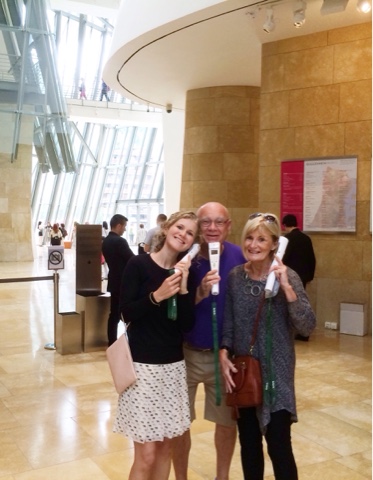
Spending the day at the magnificent Guggenheim Museum Bilbao was an incredible way to spend a birthday.

Before arriving in Bilbao, we had been told that the exterior of the Museum was actually the highlight, with the interior exhibits not living up to their potential.  

So we weren't sure what to expect when we arrived to take a look.  

But we certainly did not leave feeling disappointed!

The exterior of the building is spectacular and has received universal praise for its design.  

Created by Frank Gehry in the late 1990s, the physical site was selected by Gehry to connect the Museum with the Nervion River and thus wed it to the city's surroundings.  This location was also part of Bilbao’s decrepit port area - the city’s once prime economic driver - thus acknowledging a key element of the city's history and also encouraging revitalization of this important area.

The curves on the building appear to be random but are designed to catch the light, which is accentuated by a large, open atrium with glass panels.  These panels showcase the river on one side and, on the other side, link the Museum to the street, thereby inviting the entire city to be a part of it.  The view of the Museum is most magnificent from the riverside.

The Museum houses a number of travelling exhibitions as well as some permanent ones, including Richard Serra’s Matter of Time Exhibit, which fills a 130-meter large gallery and includes a 100-meter-long Snake, made of weathered steel.

The most compelling exhibits, however, are the visiting exhibits.  

The first exhibit showcased Jeff Koons’s work, with its balloon-like metal sculptures that somehow feel like they are floating despite their weighty composition.

Koon’s work offers an accessibility that is often lacking with other artists.  The sculptures and artwork are designed to invite people of all walks of life to view them and relate them back to their own experiences.  In doing so, he encourages us to assert our own individuality and challenge the status quo.

We were surprised to find we recognized many of Koon's works including his Rabbit stainless steel statue that has been replicated for the Macy’s Parade, a Lady Gaga album cover and of course, the image of the Incredible Hulk which is based on an old picture of Elvis Presley.


The other main exhibit was of Jean-Michel Basquiat.  Incredibly, this exhibit was organized by none other than the Art Gallery of Ontario!  

Born and raised in Brooklyn in the 1980s, Basquiat’s contemporary art was considered ground-breaking.  His works feel emotional and raw and “in the moment”.  His paintings addressed a number of topical issues through symbols, images or text which would sometimes be related and other times be completely unrelated.  

In a collaboration with Andy Warhol, the two would create paintings together. Warhol would start by drawing some kind of image and then Basquiat would add his vision to it, creating new images or painting over the existing ones.  They were often disjointed but the message connected.

Although Basquiat died in his 20s, he made a great impact in his life.  And although we each had a different impression about whether or not we liked his works, he was effective at sparking discussion, presumably his main intention.

The Sights and Tastes of Bilbao


Pushing our way through a bus station rammed with people heading to Pamplona's Festival, we hopped on a bus to Bilbao to visit Beth’s parents who had arrived in the city earlier that day. 

Bilbao has exploded as a tourist hotspot since the opening of the Guggenheim Museum Bilbao in 1997.  The city now welcomes over 600,000 visitors per year, compared with approximately 25,000 per year before the Museum was built.

This increase in tourism has transformed the city, boasting reinvigorated neighbourhoods, a slew of new buildings, and a completely revitalized waterfront that moved all of the old industrial warehouses out of the downtown core.  It has also installed numerous bridges - most walkable but one so slippery it has caused hundreds of injuries already! - to allow people to wander back and forth across the river.

The "Welcome Gates" to the City, with a sleek but very slippery bridge!

The Guggenheim Museum was controversial when first announced.  The city – struggling from an industrial crisis – was short for cash.  The Mayor’s vision to bring the Museum and thus pull precious taxpayer dollars away from struggling workers was not well-received.  His foresight and perserverance, however, has clearly paid off and the city is a vibrant and attractive city that appears to be growing every year.

During our time together in Bilbao, we took a spirited walking tour, visited the Guggenheim Museum and strolled quickly around the Mercado De La Ribera.  The Mercado is said to be the largest indoor fresh food market in the world but felt a little sparse in our minds and we completed it in under 10 minutes.    

Mercado Market
We also wandered around the historic core several times, taking the tram there but having to walk back to the hotel because we could never find the tram that could actually take us the other way!


But, in full honesty, what we spent most of our time doing was eating and drinking.  

Bilbao, much like San Sebastian, is known for its cuisine and has more Michelin-starred restaurants than one can count.  Thanks to Fred and Eleanor's dedicated research and planning to book the best ones (and the ones that actually offered any vegetarian options!), we had the opportunity to test out some incredible restaurants.    

Below are a few:

·         Zortziko – A classical restaurant where everyone spoke in hushed tones, except for the drunken Brit who came over to ask us some questions as part of a bet.   The restaurant also sported an antique duck press (about which Fred was surprisingly well-informed), and had some tasty vegetarian fare, even if it was double the price it should have been.

·         Nerua – This restaurant is housed in the Guggenheim Museum complex.  The white dining room was very simple and understated in its design, perhaps to let the food speak most loudly.  Unexpectedly, the staff invited us to tour the kitchen and meet the Chef before lunch started.  It was a lovely touch and set the meal off on the right foot.  The food was tasty, albeit a bit sparse, but the restaurant clearly paid attention to every detail, even serving the bread with a glove on so it wouldn’t be contaminated.  In addition, the bathrooms offered toothbrush kits for some oral hygiene opportunities after the meal (or even between courses to cleanse the palette!).

·         Kasko – A buzzy restaurant in the Old Town, which served the biggest food portions we have encountered in Spain.  While the restaurant’s food was not of the Michelin-Star type, the ambiance was down-to-earth and lively and the food delightful, making it a perfect Birthday Dinner spot.

·         Extanobe – On top of the Convention Centre, the restaurant’s outdoor patio offered gorgeous views of the city to accompany its tasty food.  A slow start to the service and some Sardine Lipstick appetizers aside, we thoroughly enjoyed our evening above the city and were impressed by the creative food, especially the “Chocolate Bombs” and “Chocolate Buttons” to finish the meal.

After all the eating and drinking in Bilbao, we hope the next stop on our tour will be a town that specializes in Cleanses...


Historical San Sebastian


San Sebastian in Basque Country came to prominence in the 1100s when, eager to be visited by individuals hiking the Camino De Santiago trail, the city “found” some of St. James' bones in their cathedral.  

This was a real boom to the city for several, bringing in many travellers and tourism, until Rome demanded that the bones be sent to and stored at the Vatican.

The city remained quiet but affluent until the 1500s when it was conquered by Spain and brought into the territory.  The city's strategic location offered good shipping routes to the Americas and beyond and became a favourite of the Spanish royalty who built their summer homes here.  This attracted many of the Spanish nobility with it and the city continued to flourish.

In the 1800s, Napoleon and his forces captured San Sebastian but British and Portuguese troops besieged the city and freed it from French forces.  The troops, however, ransacked and burnt the city to the ground, with only one street surviving.  This street is now called August 31st Street to commemorate that impactful day.

The city has been beautifully rebuilt in an organized neo-classical design, housing beautiful plazas and buildings such as Constitution Square and the Town Hall.  The buildings have been well-maintained and now offer tourists some attractive shopping streets and lots of Basque-cuisine restaurants.

The attractive Constitution Square
The Spanish Civil War in the 1930s turned the tides for the city.  The Spanish Nationalists were able to defeat the Basque Nationalists and take control of the city, executing the city’s mayor and hundreds of others and causing people to flee from the city.  

August 31st 
In addition, as Franco was determined to unite Spain under one banner, he created rules and regulations outlawing the Basque language, the use of Basque-related names, the teaching of Basque history in school etc., in order to destroy the city's spirit.  

In the 1950s, large industrial production in the region brought a substantial number of immigrants to the city and reinvigorated urban development and prosperity.  

Even with all of these changes, the Basque natives remained determined to gain back the right to their cultural heritage. As a result, a climate of protest and street demonstrations followed. This desire for the Basque Country to be independent and autonomous was indeed so strong that it also sparked the development of the separatist organization ETA in the 1960s.  

After Franco’s death in the 1970s and the appointment of Prince Juan Carlos as the new leader, democracy was restored in Spain.  This reinvigorated the desire for Basque Country autonomy which fueled the initiatives of the ETA even further.  Terrorist attacks and initiatives ran rampant in San Sebastian and surrounding areas, once again hurting the city.  

Over time, however, a variety of initiatives - such as the opening up of the EU which allowed for the capture of many terrorists and a general fatigue around the ETA's violent reign - resulted in a backlash against and the dissipation of the ETA.  And by the early 2000s, the ETA was no longer considered problematic.

Although the Basque Country does not have complete autonomy or independence, they have been given almost complete authority over their own region.  Individuals pay taxes to the local government and this local government, in turn, pays 6% of these taxes to the Federal Government. The Basque people have complete control over their schools, health, transportation, language, justice systems and beyond.  The portion to the Federal Government appears to pay for a joint military and membership in the EU etc.

The community’s passion for their cultural heritage can be seen in all parts of the city.  Only Basque Flags are hung (with the exception of likely 2 Spanish flags which can be seen on a government building), the Basque language is used throughout the city and Basque food reigns supreme.  Even though other types of food restaurants have opened in the region, they almost never survive as the Basque community is said to only want to eat Basque food!  

San Sebastian has emerged from the conflict and is beginning to draw in thousands of tourists once again.  Next year, for example, San Sebastian has been chosen as the EU’s Cultural City of the year which will undoubtedly spur even more tourist development.  It will certainly be exciting to see how the city grows.


Lights. Camera. Action.

Beth and Hitchcock
An hour away from Pamplona is the quaint city of San Sebastian.  The city is made up of a gorgeous Old Town and an expansive beachfront offering tourists both culture and surf in one holiday.  This combination has made San Sebastian one of the most popular European summer destinations.  

That being said, we spent most of our time in San Sebastian working and doing chores – laundry, haircuts (with multiple visits due to language challenges!), getting glasses fixed etc. - so got to enjoy just a small taste of what the charming city had to offer.

A new use for an old bathtub
Luckily, our hotel provided an experience in itself.  The Astoria 7 is themed around the San Sebastian film festival, with every room and common space designed around an actor/actress/director etc. who has appeared at the festival.  Although we couldn't book the infamous Alfred Hitchcock room, we were happy to stay in the Pilar Miro room, which honored the work of this Madrid-born artist.  

In the common space, we could sit and hang with "Alfred" who was perched and ready to greet all that entered the hotel.  Even more enticing, the common space had a huge movie screen which, although usually used for movie screenings, was set up to show the Wimbledon championship.     

Wednesday, 15 July 2015

The Running...

Although Pamplona's San Fermin festival has a wide variety of activities, the premier event is the Running of the Bulls (the “Encierro”).    This bizarre tradition involves grown men and women running in front of 6 bulls along a narrow set of streets hoping not to get gored or trampled.  Apparently, it is quite an adrenaline rush...but the appeal is still questionable to us even after seeing it in person.

The final street clean
Spanish tradition says that the origin of this ritual began in the 14th century.  While transporting cattle to the market, the owners would try to hurry them along using tactics of fear and excitement.  This habit grew more competitive over time and men would attempt to run in front of the bulls without being overtaken by these animals.

The morning Bull Run now draws thousands of men and women who line the streets with hopes of running in front of or alongside of the bulls for even a few seconds.  The narrow streets means that the runners are crammed in quite tightly, causing an added level of risk.

The toro bravo breed of bulls who run are raised and trained specifically for this event and practice running similar courses everyday.  When they arrive in Pamplona, the bulls actually do a trial run late the evening before the official run.  From there, they overnight in the paddock right next to where the official course actually begins.

The Encierro begins with runners singing a benediction three times in front of a statue of Saint Fermin, asking for the Saint’s protection.  Most hold newspapers as they chant which can be used in an emergency to help draw a bull’s attention away from a risky situation.

At 8am, the first rocket is launched to let the runners and spectators know that the bull pen’s gate has been opened.  The second rocket is launched when the bulls are out of the pen.  

The runners, being much slower than the bulls, are given a head start so the first part of the race is just the bulls.  The next few minutes speed by in a flash as the bulls make their way through the streets.  

For the most part, they seem somewhat disinterested in the runners who are running beside and in front of them.   The goring and trampling results mostly from people getting in their way as the bulls continue their run as practiced.  During the two days we watched, only one bull seemed really angry and appeared to bolt out in front of the other bulls and start charging at people, letting them know he was not pleased.

The run ends at the stadium where the bulls run through the arena and then into a pen at the other side.
We watched the race in two ways, the first from a balcony and the second in the Arena where the bulls finish.  

The balcony allowed us to be in the heart of the action.  Our hearts raced as the runners made their way onto the street and you could actually feel their nerves and anticipation permeating through the street as the hugged each other, kissed their religious necklaces and did their final stretches.  You could also see the looks of terror and excitement as they saw the bulls coming around the corner. And then 10 seconds later they were down the street and out of view.

Likely our preferred way to watch the race was in the Arena.  Although we had bought tickets, the ticketmaster booths were broken and so we were forced to buy new tickets that morning.  Luckily, the replacemet tickets were a fraction of the cost at only 3 euros!

The stadium offered a much greater lead-up to the event, with a marching band, hilarious video montages and a very rambunctious crowd, many of whom were still up partying from the night before.  Before the race, each bull was profiled, giving the audience details about their name, weight, age etc.


Being in the Arena allowed us to see the race from start to finish on the big screen.  The Arena floor was full by the time the runners all made it into the stadium and you could feel their exhilaration as they had made it there safely.


After the Bull Run, a couple of young bulls (with horns wrapped) were let out into the ring, allowing people to play matador without real consequence.  This seemed to delight everyone in the Arena and even the bulls seemed to kind of enjoy it, refusing to leave the festivities even when both people and the steers tried to cajole them back into their pens.


So many people willingly getting up at 5am on their vacations for a three-minute bull run.  Motivations, just the like the run itself, can be so strange sometimes.